Helping Knotel's Customer Managers catch problems before customers do

tl;dr

Problem

There were no consistent space standards across Knotel offices, and no system to track whether Customer Managers were upholding them.

Results

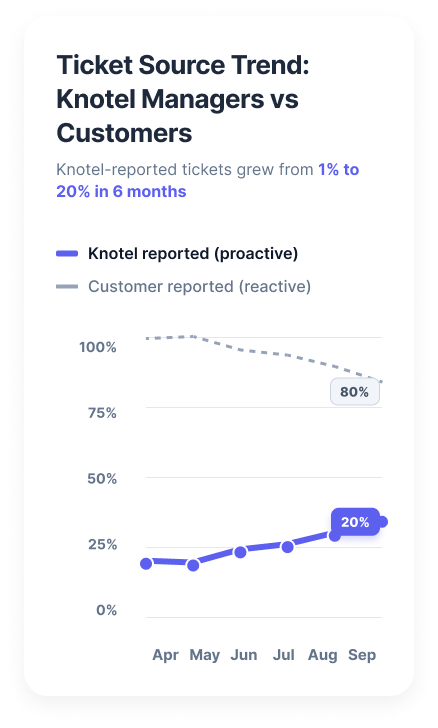
Beta launched 🚀 — 20% increase in proactive ticket creation within 4 months, with early signs it supported retention too.

Solution

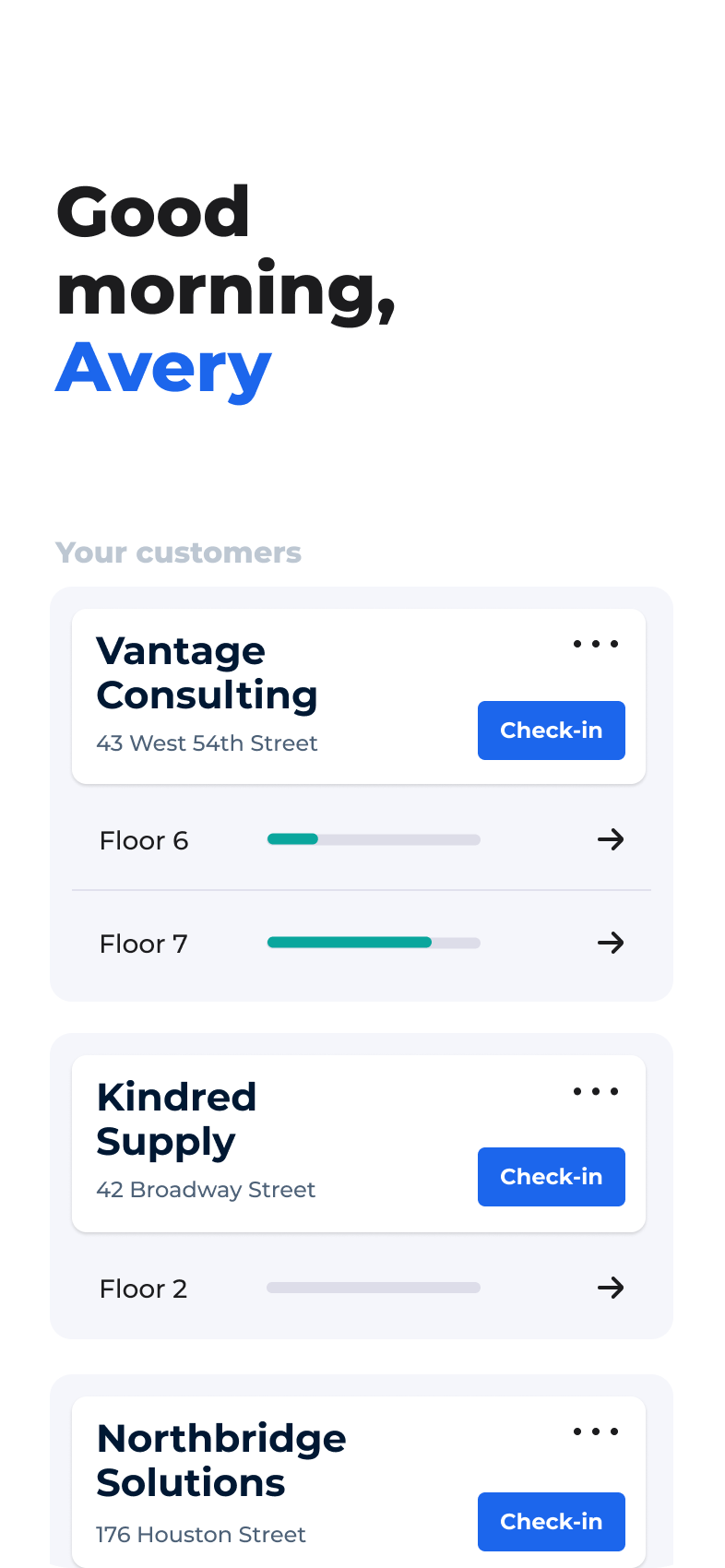
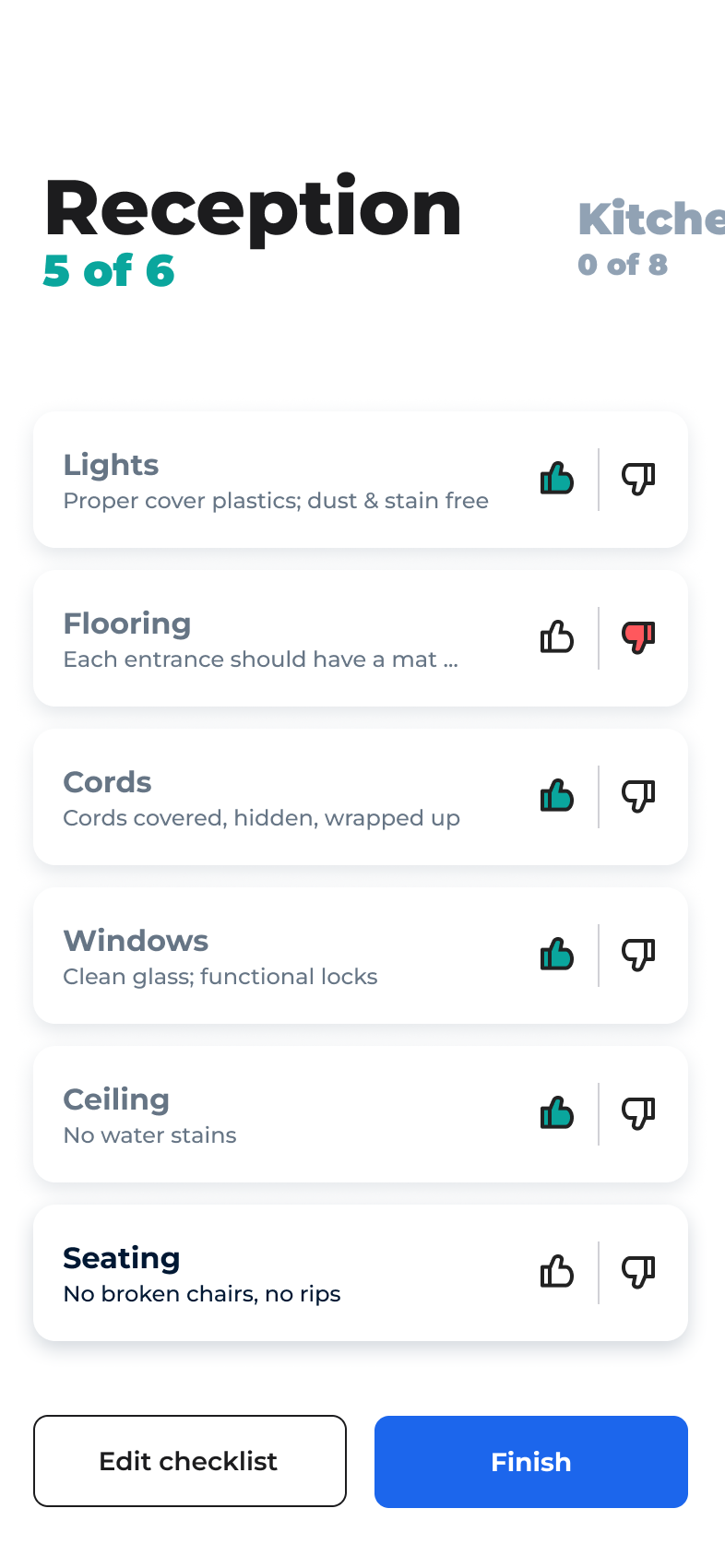
An MVP mobile app for Customer Managers to proactively inspect spaces and log issues — plus ad hoc issue logging that mirrored their daily workflow, driving stickier adoption.

My behavior
  • Mapped communication networks to find data opportunities
  • Tested concepts that shaped the MVP and roadmap
  • Pushed a bottom-up approach
  • Ran continuous feedback loops, co-designing with users
Defining the problem

At Knotel (think Airbnb for flexible office leasing), I was the sole product designer on the retention team, partnering with one researcher and two engineers to catch customer issues before they churned.

Regional Managers at Knotel approached my team for better visibility into how well their Customer Managers maintained office spaces. They had no way to know whether office standards were being upheld until a customer complained — by which point retention was already at risk.

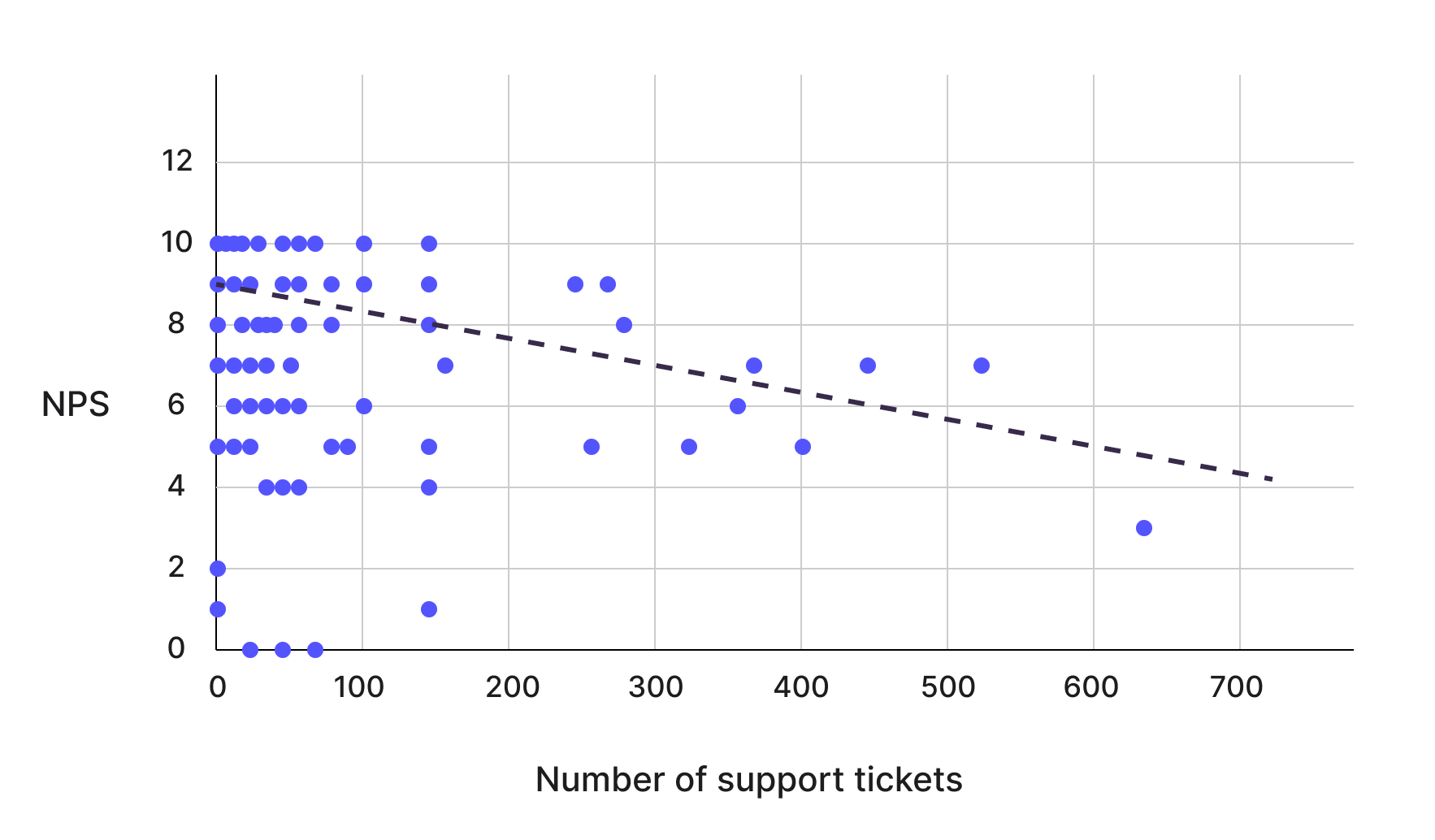
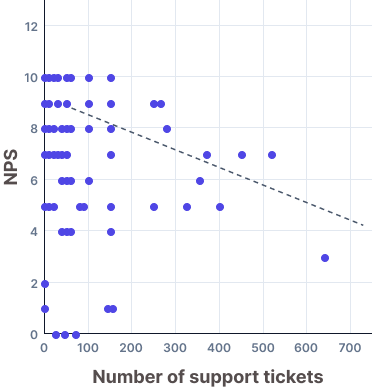
Through discovery, we found a reasonable correlation: the more issues reported by customers themselves, the lower their satisfaction with Knotel and the more at risk they were of churning.

Scatter plot of NPS score vs. number of support tickets showing a negative correlation trend line

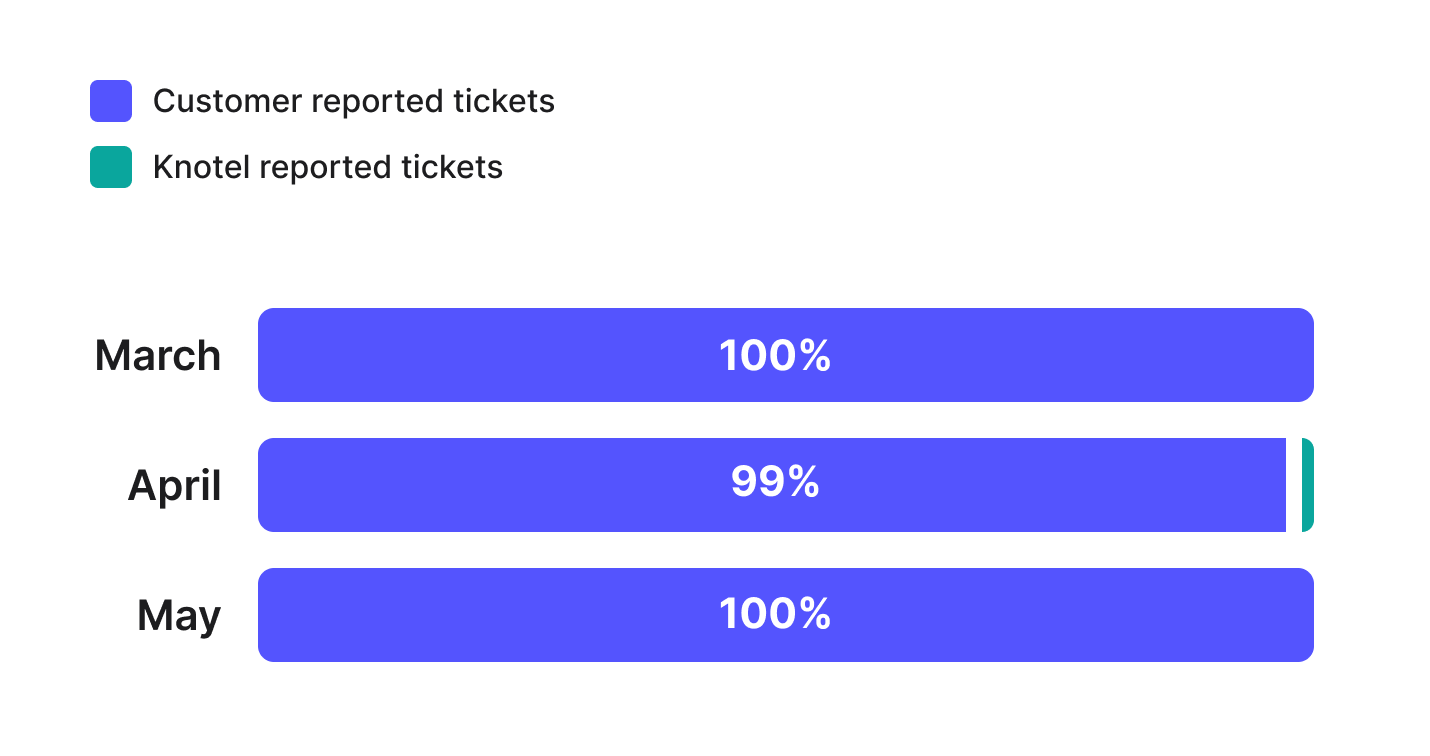
We observed that most issues were reported by customers, not Knotel Customer Managers. We hypothesized that increasing the number of issues reported by Knotel would reduce the burden on customers and boost their satisfaction.

Bar chart showing mostly all tickets were reported by customers, not Knotel Customer Managers

Before designing for Customer Managers, I needed to understand what they actually dealt with day to day. I built a persona from five walkthroughs — the clearest pattern: they held the most real-time knowledge of customer sentiment in the company, and it wasn't being captured anywhere.

“I try to keep the customer from seeing all the inefficiencies happening behind the scenes — but sometimes it's impossible, since Knotel still operates like a startup.”

Knotel Customer Manager

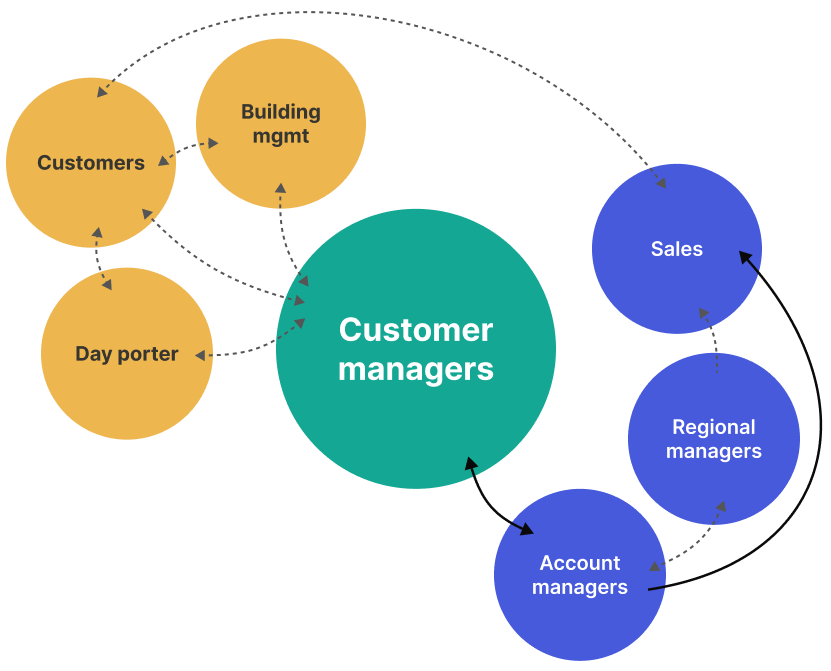
I mapped how communication flowed across the relevant parts of the Knotel ecosystem — this helped surface that getting this data earlier could let Sales and Account Managers step in before a customer churned.

Communication flow diagram showing Customer Managers at the center, connected to Customers, Building Management, Day Porters, Sales, Regional Managers, and Account Managers

Diverging on solutions

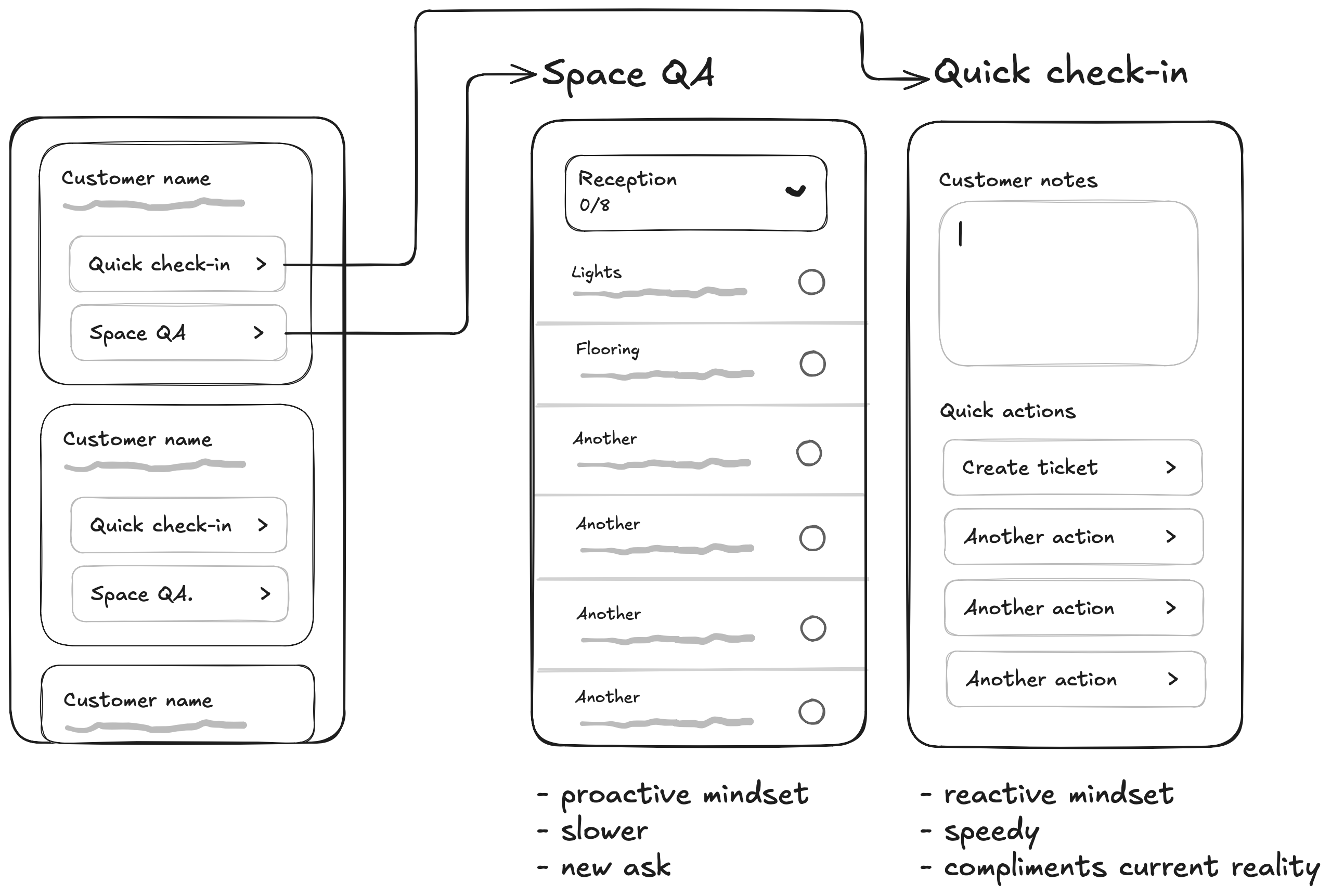
Regional Managers wanted a proactive audit. However, Customer Managers spent 90% of their time reactive — a kitchen leak doesn't wait for a bi-monthly checklist. Rather than pick one, I pushed for two workflows: Space QA for the audit, Quick Check-In for the reactive moments that filled most of their day. It meant less depth per workflow and more build scope — a bet worth making to validate both directions before committing to one.

Low-fidelity wireframe sketches showing two solution directions: Space QA proactive checklist and Quick Check-in reactive workflow

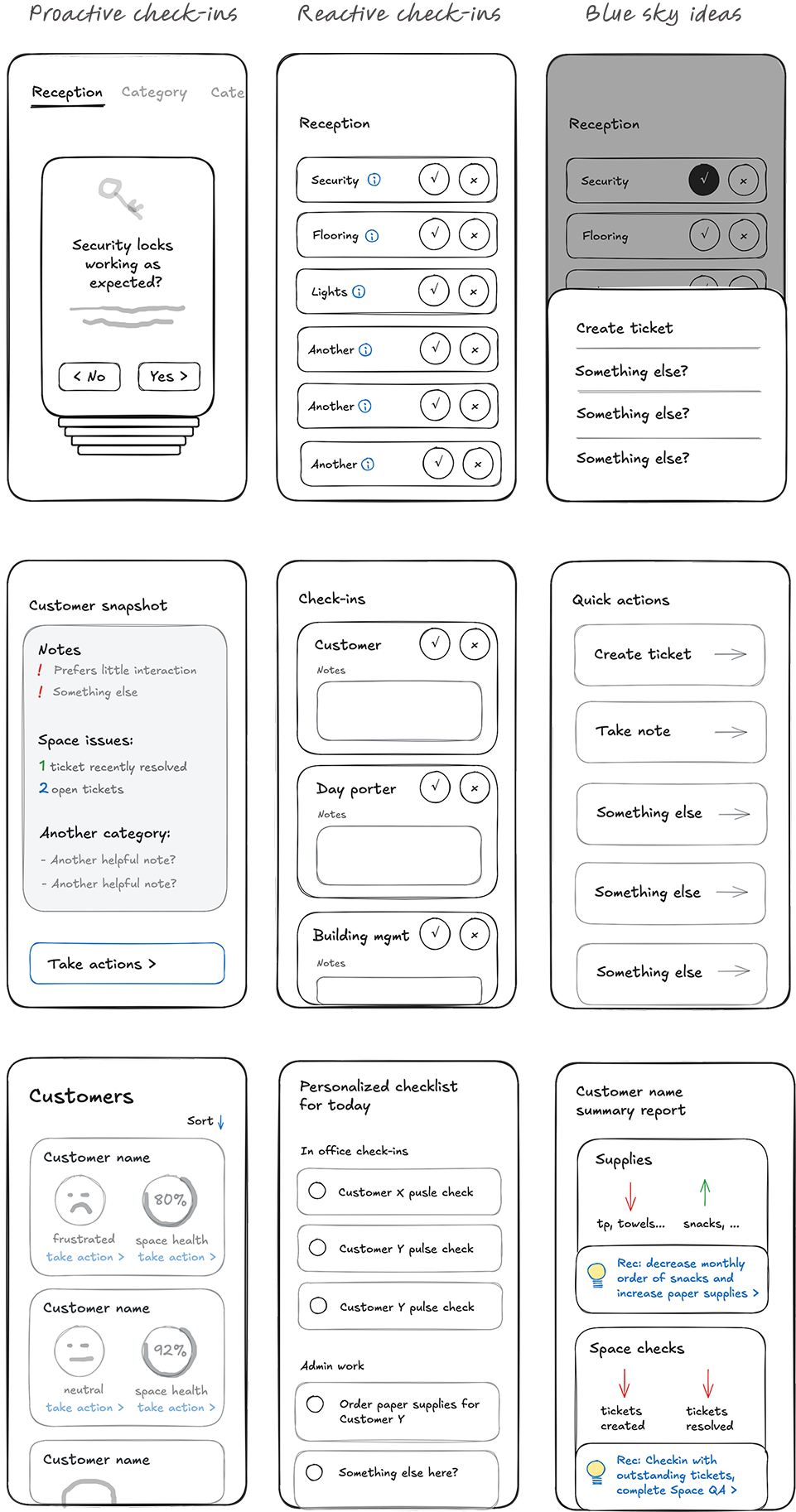
I ran 20+ sketches through 1:1s with 5 Customer Managers, across three lanes.

Collection of hand-drawn wireframe sketches across three lanes: proactive check-ins, reactive check-ins, and blue sky ideas

Converging on solutions

Sketch testing validated both directions — Space QA and Check-In as distinct, permanent workflows rather than one compromise. I posted designs on the office wall for real-time Customer Manager feedback, then ran a think-aloud test on an MVP prototype.

Key takeaways:

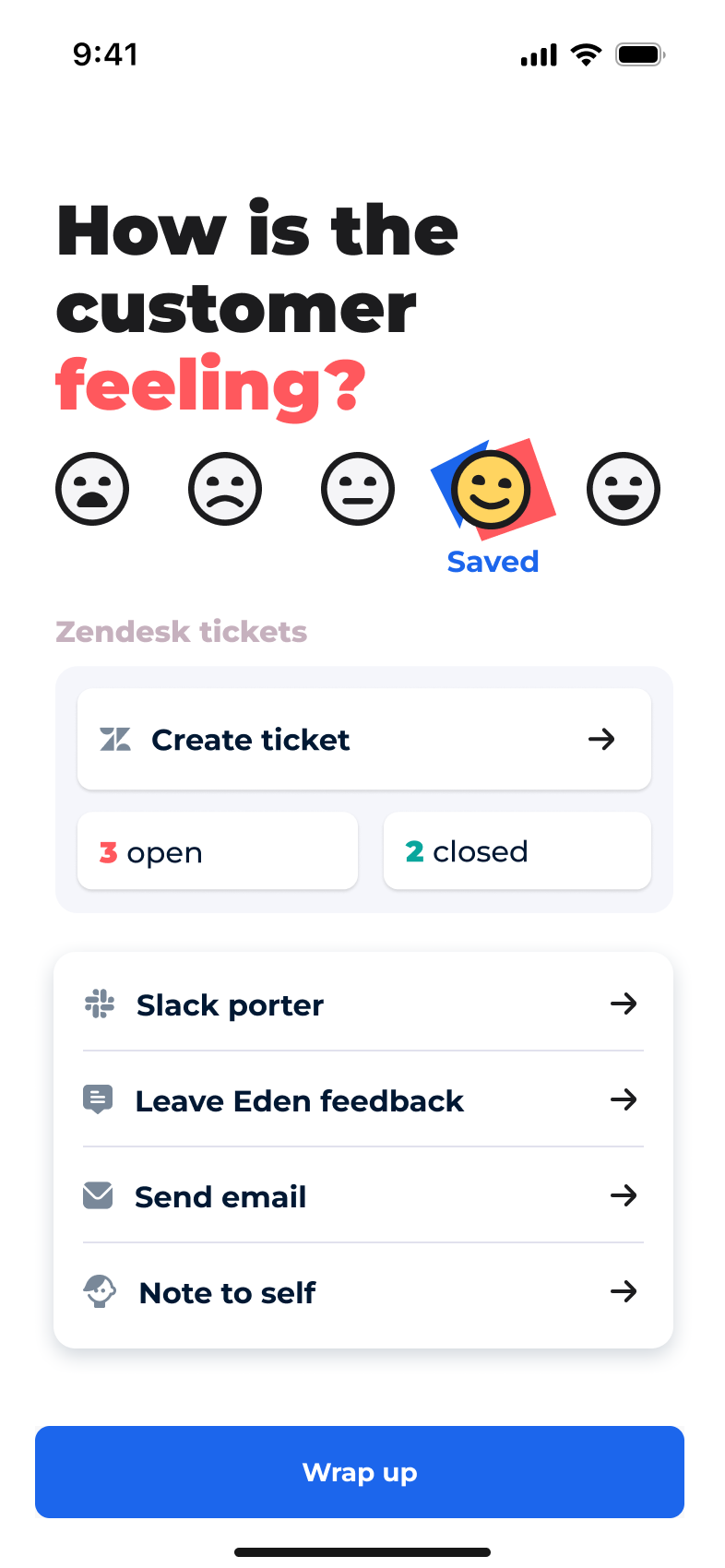
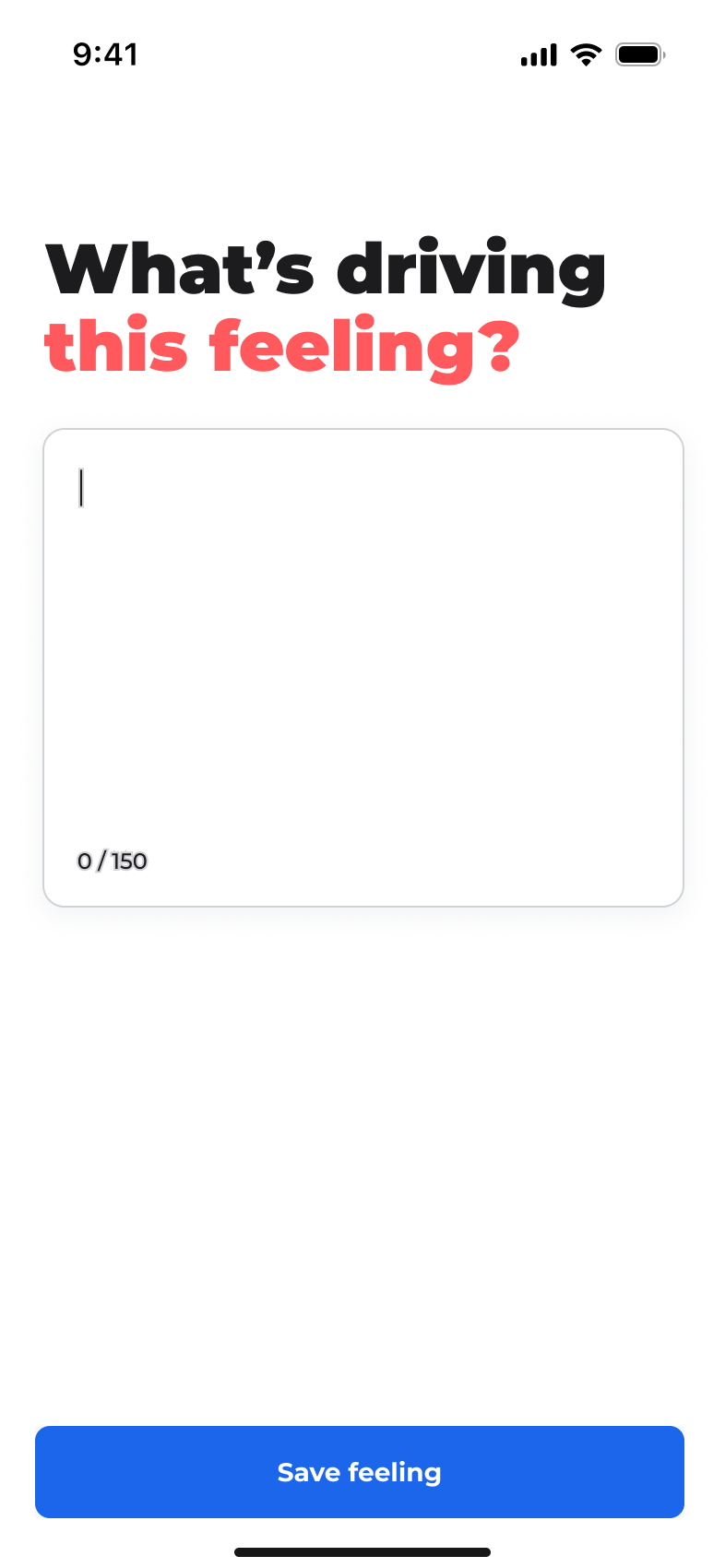
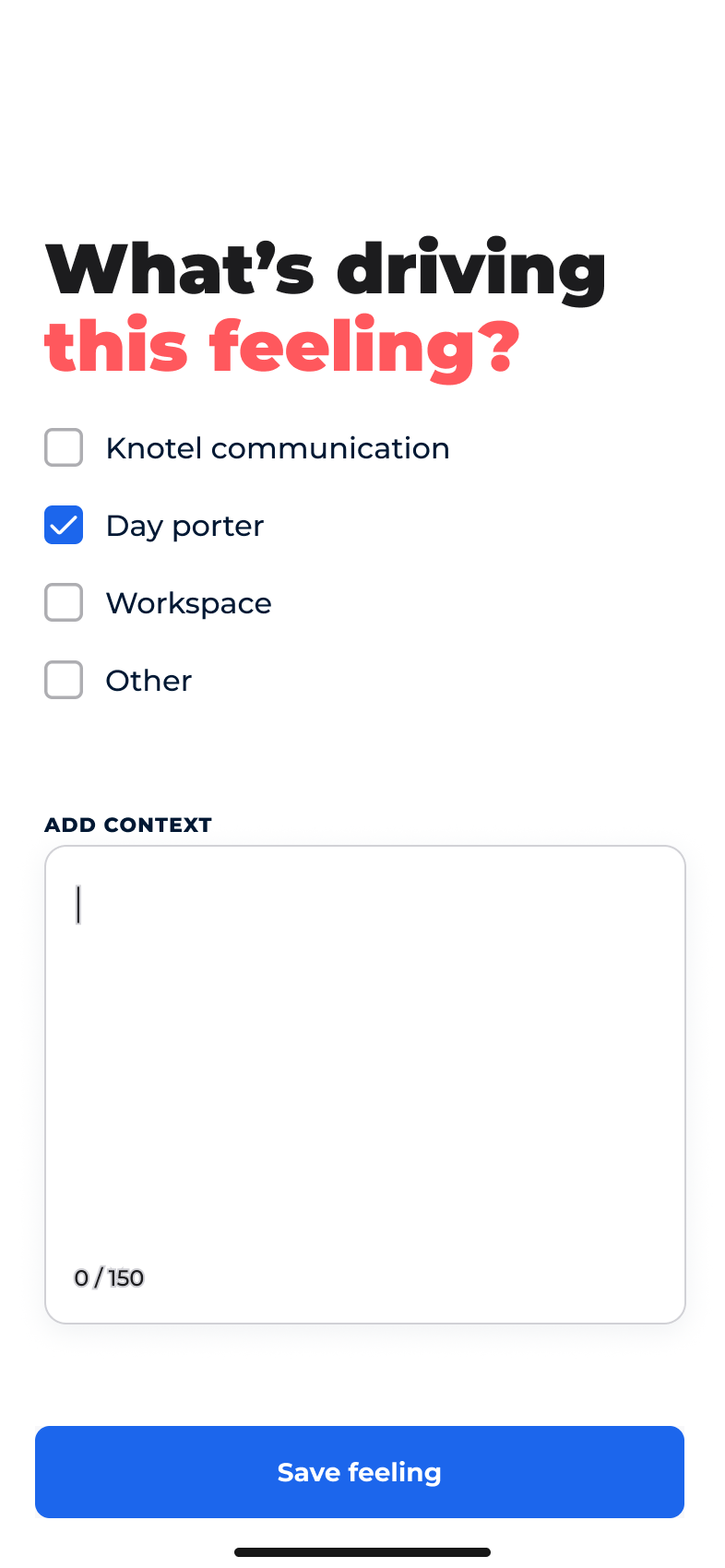
1. Pulse checks needed to be quick and contextual. The MVP captured freeform data first — a multi-select of top reasons could come later once we knew what patterns actually showed up.

  • Mobile app screen for Quick Check-in showing customer sentiment selector, ticket counts, and quick actions like Create ticket and Slack porter
    Quick Check-in
  • Mobile app screen for Quick Check-in MVP showing 1 form-field for user to give more context on why a customer feels a certain way
    MVP: simplified data collection
  • Mobile app screen for Quick Check-in: Future version showing an additional multi-select option on why a customer might be feeling a certain way
    Future: richer data collection

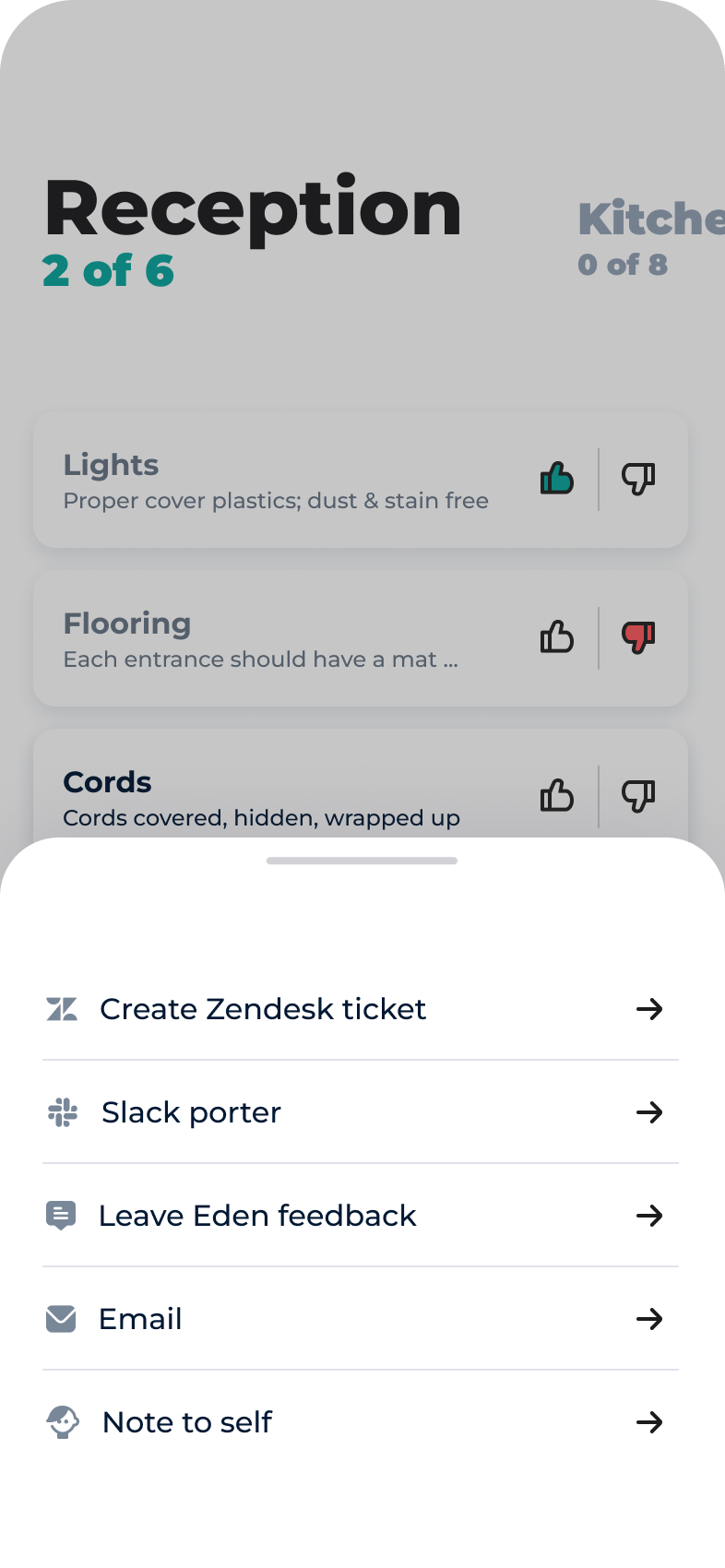
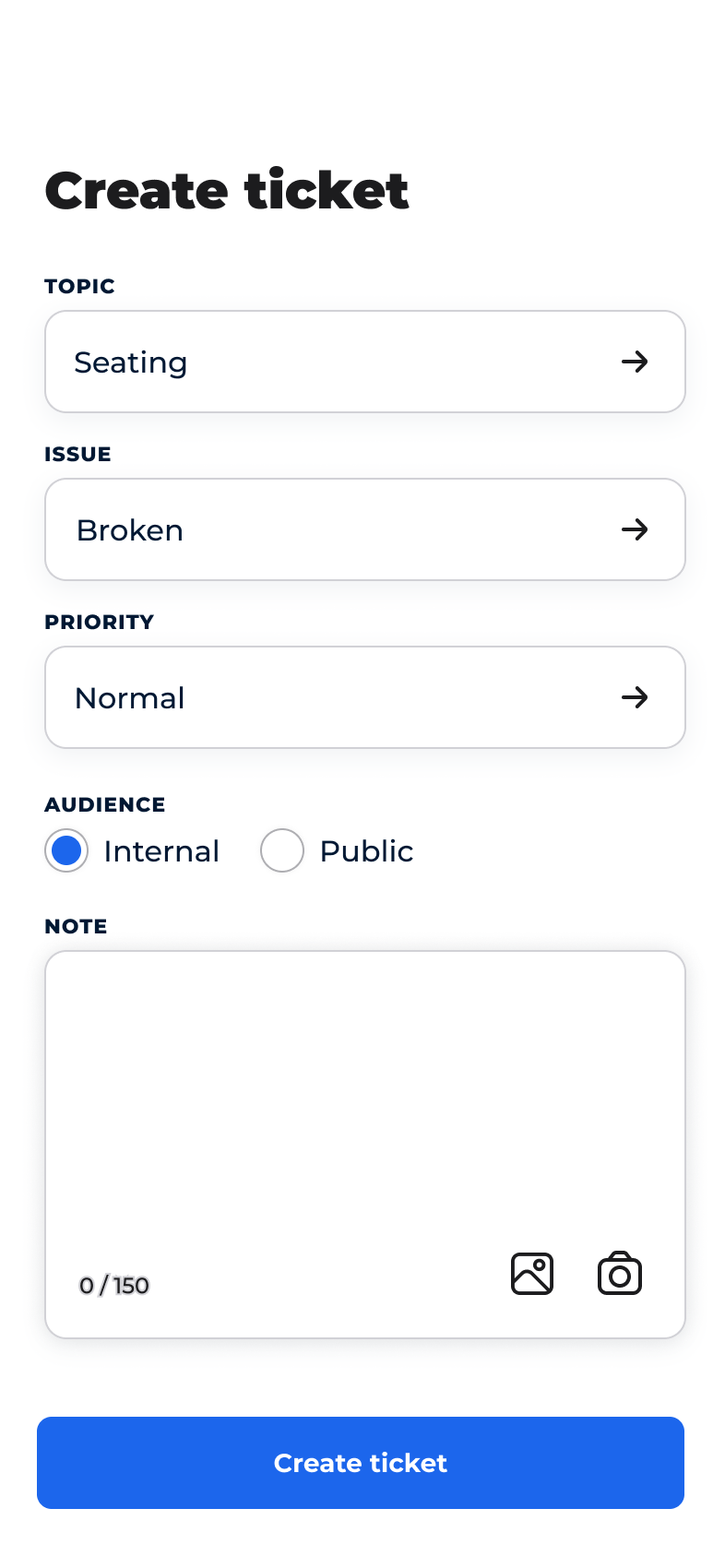
2. App-switching to report issues was more disruptive than expected. The most common actions had to stay in-app to keep the flow fast.

  • Mobile app screen showing quick common actions available to Customer Managers
    Quick, common actions
  • Mobile app screen showing support tickets synced to Zendesk
    Tickets synced to Zendesk

3. Progress indicators would help — Space QA already felt tedious. I deprioritized it: without data suggesting its absence would block adoption, it wasn't worth the build time before beta.

  • Mobile app screen showing overall Space QA progress overview, a planned future feature
    Overall Space QA progress (future)
  • Mobile app screen showing detailed Space QA progress breakdown, a planned future feature
    Detailed Space QA progress (future)
  1. Every property is different, so checklists needed to be editable. Not a beta blocker, but skipping it meant ongoing manual workarounds — an important follow-up.
  • Editable for unique offices (future)

Results and next steps

We launched a month-long beta with 8 Customer Managers. Goals were met: one check-in per customer, one space audit every two weeks, no blocking feedback — so we rolled out further and kept iterating.

Early results:

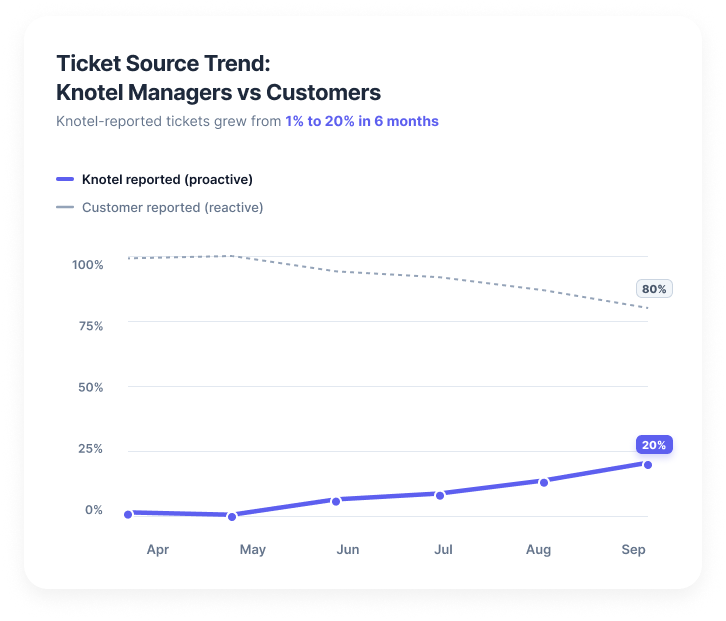
  • 20% increase in Knotel’s Customer Managers proactively reported issues within 4 months
  • All Customer Managers rated the app 4 or 5 out of 5 for ease-of-use and intuitiveness
  • The majority of proactive tickets came through Quick Check-In, not Space QA — confirming the reactive workflow wasn't a nice-to-have, it was where most of the behavior change actually happened
  • Early correlation data suggested this shift could support the retention theory Regional Managers started with — worth validating further with a longer baseline
Line chart showing ticket source trend over six months — Knotel-reported proactive tickets grew from 1% to 20% while customer-reported reactive tickets declined

Next steps:

  • Establish a baseline for customer health to analyze deeper correlations (e.g., does time-to-resolution affect satisfaction?)
  • Give Sales and Account Managers real-time access to customer insights at the moment they're most actionable

Say hello!

Helping Knotel's Customer Managers catch problems before customers do

tl;dr

Problem

There were no consistent space standards across Knotel offices, and no system to track whether Customer Managers were upholding them.

Results

Beta launched 🚀 — 20% increase in proactive ticket creation within 4 months, with early signs it supported retention too.

Solution

An MVP mobile app for Customer Managers to proactively inspect spaces and log issues — plus ad hoc issue logging that mirrored their daily workflow, driving stickier adoption.

My behavior
  • Mapped communication networks to find data opportunities
  • Tested concepts that shaped the MVP and roadmap
  • Pushed a bottom-up approach
  • Ran continuous feedback loops, co-designing with users
Defining the problem

At Knotel (think Airbnb for flexible office leasing), I was the sole product designer on the retention team, partnering with one researcher and two engineers to catch customer issues before they churned.

Regional Managers at Knotel approached my team for better visibility into how well their Customer Managers maintained office spaces. They had no way to know whether office standards were being upheld until a customer complained — by which point retention was already at risk.

Through discovery, we found a reasonable correlation: the more issues reported by customers themselves, the lower their satisfaction with Knotel and the more at risk they were of churning.

Scatter plot of NPS score vs. number of support tickets showing a negative correlation trend line

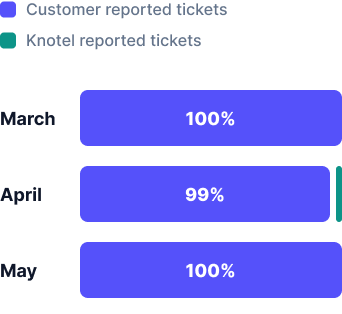
We observed that most issues were reported by customers, not Knotel Customer Managers. We hypothesized that increasing the number of issues reported by Knotel would reduce the burden on customers and boost their satisfaction.

Bar chart showing mostly all tickets were reported by customers, not Knotel Customer Managers

Before designing for Customer Managers, I needed to understand what they actually dealt with day to day. I built a persona from five walkthroughs — the clearest pattern: they held the most real-time knowledge of customer sentiment in the company, and it wasn't being captured anywhere.

“I try to keep the customer from seeing all the inefficiencies happening behind the scenes — but sometimes it's impossible, since Knotel still operates like a startup.”

Knotel Customer Manager

I mapped how communication flowed across the relevant parts of the Knotel ecosystem — this helped surface that getting this data earlier could let Sales and Account Managers step in before a customer churned.

Communication flow diagram showing Customer Managers at the center, connected to Customers, Building Management, Day Porters, Sales, Regional Managers, and Account Managers

Diverging on solutions

Regional Managers wanted a proactive audit. However, Customer Managers spent 90% of their time reactive — a kitchen leak doesn't wait for a bi-monthly checklist. Rather than pick one, I pushed for two workflows: Space QA for the audit, Quick Check-In for the reactive moments that filled most of their day. It meant less depth per workflow and more build scope — a bet worth making to validate both directions before committing to one.

Low-fidelity wireframe sketches showing two solution directions: Space QA proactive checklist and Quick Check-in reactive workflow

I ran 20+ sketches through 1:1s with 5 Customer Managers, across three lanes.

Collection of hand-drawn wireframe sketches across three lanes: proactive check-ins, reactive check-ins, and blue sky ideas

Converging on solutions

Sketch testing validated both directions — Space QA and Check-In as distinct, permanent workflows rather than one compromise. I posted designs on the office wall for real-time Customer Manager feedback, then ran a think-aloud test on an MVP prototype.

Key takeaways:

1. Pulse checks needed to be quick and contextual. The MVP captured freeform data first — a multi-select of top reasons could come later once we knew what patterns actually showed up.

  • Mobile app screen for Quick Check-in showing customer sentiment selector, ticket counts, and quick actions like Create ticket and Slack porter
    Quick Check-in
  • Mobile app screen for Quick Check-in MVP showing 1 form-field for user to give more context on why a customer feels a certain way
    MVP: simplified data collection
  • Mobile app screen for Quick Check-in: Future version showing an additional multi-select option on why a customer might be feeling a certain way
    Future: richer data collection

2. App-switching to report issues was more disruptive than expected. The most common actions had to stay in-app to keep the flow fast.

  • Mobile app screen showing quick common actions available to Customer Managers
    Quick, common actions
  • Mobile app screen showing support tickets synced to Zendesk
    Tickets synced to Zendesk

3. Progress indicators would help — Space QA already felt tedious. I deprioritized it: without data suggesting its absence would block adoption, it wasn't worth the build time before beta.

  • Mobile app screen showing overall Space QA progress overview, a planned future feature
    Overall Space QA progress (future)
  • Mobile app screen showing detailed Space QA progress breakdown, a planned future feature
    Detailed Space QA progress (future)
  1. Every property is different, so checklists needed to be editable. Not a beta blocker, but skipping it meant ongoing manual workarounds — an important follow-up.
  • Editable for unique offices (future)

Results and next steps

We launched a month-long beta with 8 Customer Managers. Goals were met: one check-in per customer, one space audit every two weeks, no blocking feedback — so we rolled out further and kept iterating.

Early results:

  • 20% increase in Knotel’s Customer Managers proactively reported issues within 4 months
  • All Customer Managers rated the app 4 or 5 out of 5 for ease-of-use and intuitiveness
  • The majority of proactive tickets came through Quick Check-In, not Space QA — confirming the reactive workflow wasn't a nice-to-have, it was where most of the behavior change actually happened
  • Early correlation data suggested this shift could support the retention theory Regional Managers started with — worth validating further with a longer baseline
Line chart showing ticket source trend over six months — Knotel-reported proactive tickets grew from 1% to 20% while customer-reported reactive tickets declined

Next steps:

  • Establish a baseline for customer health to analyze deeper correlations (e.g., does time-to-resolution affect satisfaction?)
  • Give Sales and Account Managers real-time access to customer insights at the moment they're most actionable

Say hello!

Helping Knotel's Customer Managers catch problems before customers do

tl;dr

Problem

There were no consistent space standards across Knotel offices, and no system to track whether Customer Managers were upholding them.

Results

Beta launched 🚀 — 20% increase in proactive ticket creation within 4 months, with early signs it supported retention too.

Solution

An MVP mobile app for Customer Managers to proactively inspect spaces and log issues — plus ad hoc issue logging that mirrored their daily workflow, driving stickier adoption.

My behavior
  • Mapped communication networks to find data opportunities
  • Tested concepts that shaped the MVP and roadmap
  • Pushed a bottom-up approach
  • Ran continuous feedback loops, co-designing with users
Defining the problem

At Knotel (think Airbnb for flexible office leasing), I was the sole product designer on the retention team, partnering with one researcher and two engineers to catch customer issues before they churned.

Regional Managers at Knotel approached my team for better visibility into how well their Customer Managers maintained office spaces. They had no way to know whether office standards were being upheld until a customer complained — by which point retention was already at risk.

Through discovery, we found a reasonable correlation: the more issues reported by customers themselves, the lower their satisfaction with Knotel and the more at risk they were of churning.

Scatter plot of NPS score vs. number of support tickets showing a negative correlation trend line

We observed that most issues were reported by customers, not Knotel Customer Managers. We hypothesized that increasing the number of issues reported by Knotel would reduce the burden on customers and boost their satisfaction.

Bar chart showing mostly all tickets were reported by customers, not Knotel Customer Managers

Before designing for Customer Managers, I needed to understand what they actually dealt with day to day. I built a persona from five walkthroughs — the clearest pattern: they held the most real-time knowledge of customer sentiment in the company, and it wasn't being captured anywhere.

“I try to keep the customer from seeing all the inefficiencies happening behind the scenes — but sometimes it's impossible, since Knotel still operates like a startup.”

Knotel Customer Manager

I mapped how communication flowed across the relevant parts of the Knotel ecosystem — this helped surface that getting this data earlier could let Sales and Account Managers step in before a customer churned.

Communication flow diagram showing Customer Managers at the center, connected to Customers, Building Management, Day Porters, Sales, Regional Managers, and Account Managers

Diverging on solutions

Regional Managers wanted a proactive audit. However, Customer Managers spent 90% of their time reactive — a kitchen leak doesn't wait for a bi-monthly checklist. Rather than pick one, I pushed for two workflows: Space QA for the audit, Quick Check-In for the reactive moments that filled most of their day. It meant less depth per workflow and more build scope — a bet worth making to validate both directions before committing to one.

Low-fidelity wireframe sketches showing two solution directions: Space QA proactive checklist and Quick Check-in reactive workflow

I ran 20+ sketches through 1:1s with 5 Customer Managers, across three lanes.

Collection of hand-drawn wireframe sketches across three lanes: proactive check-ins, reactive check-ins, and blue sky ideas

Converging on solutions

Sketch testing validated both directions — Space QA and Check-In as distinct, permanent workflows rather than one compromise. I posted designs on the office wall for real-time Customer Manager feedback, then ran a think-aloud test on an MVP prototype.

Key takeaways:

1. Pulse checks needed to be quick and contextual. The MVP captured freeform data first — a multi-select of top reasons could come later once we knew what patterns actually showed up.

  • Mobile app screen for Quick Check-in showing customer sentiment selector, ticket counts, and quick actions like Create ticket and Slack porter
    Quick Check-in
  • Mobile app screen for Quick Check-in MVP showing 1 form-field for user to give more context on why a customer feels a certain way
    MVP: simplified data collection
  • Mobile app screen for Quick Check-in: Future version showing an additional multi-select option on why a customer might be feeling a certain way
    Future: richer data collection

2. App-switching to report issues was more disruptive than expected. The most common actions had to stay in-app to keep the flow fast.

  • Mobile app screen showing quick common actions available to Customer Managers
    Quick, common actions
  • Mobile app screen showing support tickets synced to Zendesk
    Tickets synced to Zendesk

3. Progress indicators would help — Space QA already felt tedious. I deprioritized it: without data suggesting its absence would block adoption, it wasn't worth the build time before beta.

  • Mobile app screen showing overall Space QA progress overview, a planned future feature
    Overall Space QA progress (future)
  • Mobile app screen showing detailed Space QA progress breakdown, a planned future feature
    Detailed Space QA progress (future)
  1. Every property is different, so checklists needed to be editable. Not a beta blocker, but skipping it meant ongoing manual workarounds — an important follow-up.
  • Editable for unique offices (future)

Results and next steps

We launched a month-long beta with 8 Customer Managers. Goals were met: one check-in per customer, one space audit every two weeks, no blocking feedback — so we rolled out further and kept iterating.

Early results:

  • 20% increase in Knotel’s Customer Managers proactively reported issues within 4 months
  • All Customer Managers rated the app 4 or 5 out of 5 for ease-of-use and intuitiveness
  • The majority of proactive tickets came through Quick Check-In, not Space QA — confirming the reactive workflow wasn't a nice-to-have, it was where most of the behavior change actually happened
  • Early correlation data suggested this shift could support the retention theory Regional Managers started with — worth validating further with a longer baseline
Line chart showing ticket source trend over six months — Knotel-reported proactive tickets grew from 1% to 20% while customer-reported reactive tickets declined

Next steps:

  • Establish a baseline for customer health to analyze deeper correlations (e.g., does time-to-resolution affect satisfaction?)
  • Give Sales and Account Managers real-time access to customer insights at the moment they're most actionable

Say hello!